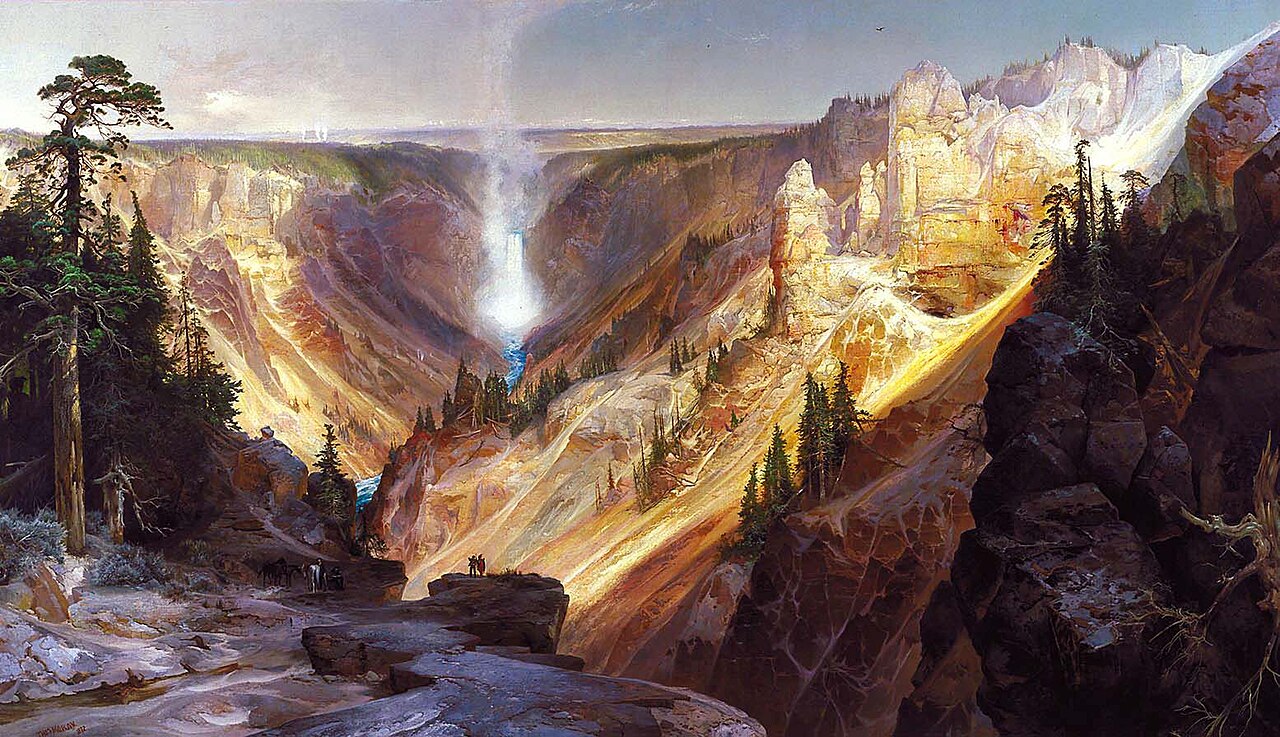
In the vast tapestry of American landscape art, few works capture the raw, majestic spirit of the Western wilderness quite like Thomas Moran's 1901 masterpiece, The Grand Canyon of the Yellowstone. This monumental oil on canvas is more than just a painting; it's a testament to the power of nature, the vision of an artist, and a pivotal moment in the birth of America's national park system. Housed today in the Smithsonian American Art Museum in Washington, D.C., this colossal artwork invites viewers into a dramatic, awe-inspiring vista of the Grand Canyon of the Yellowstone, immortalizing a landscape that continues to captivate millions.
A Panoramic Vision of the American West
Standing at an impressive 96½ × 168⅜ inches (over 8 by 14 feet), Moran’s 1901 rendition of The Grand Canyon of the Yellowstone is a truly immersive experience. Unlike his earlier, smaller 1872 painting of the same title, this later work presents an expansive, almost overwhelming panorama. Moran, an English-American artist deeply influenced by the Hudson River School, masterfully blends meticulous observation with a romanticized, almost fantastical interpretation of nature's grandeur. The canvas bursts with life, depicting the Yellowstone River as it carves its way through steep, brilliantly colored rhyolite walls, their vibrant hues of yellow, red, and green testifying to rich mineral deposits within the rock.
The scene is alive with movement: misty waterfalls cascade into the depths, while a vast sky overhead is filled with dynamic clouds and dramatic light effects. Moran's genius lies in his ability to capture not just the physical appearance of the canyon, but its very essence – its sublime scale, untamed power, and breathtaking beauty. Every brushstroke contributes to a sense of awe, pulling the viewer into the dramatic depths and towering heights of this geological marvel. It’s a vision that speaks to the heart of the American wilderness, a blend of scientific accuracy in geological forms and an emotional, almost spiritual reverence for the landscape.
The Hudson River School and Moran's Legacy
As a leading figure in the second generation of the Hudson River School, Moran carried forward the tradition of landscape painting that sought to depict the American wilderness as a reflection of divine presence and national identity. These artists believed that nature held moral and spiritual lessons, and their epic canvases served as visual sermons. Moran extended this philosophy to the rugged, unexplored territories of the American West, using his art to introduce Eastern audiences to its wonders. His works were not mere topographical records; they were narratives, epic tales told through light, shadow, and color, designed to evoke wonder and admiration. In The Grand Canyon of the Yellowstone, this philosophy reaches its zenith, offering a powerful argument for the preservation of these sacred spaces.
Moran's Expeditionary Art and the Birth of a National Park
The very existence of this painting, and indeed the protection of Yellowstone itself, is deeply rooted in Moran's adventurous spirit and his participation in the pivotal 1871 Hayden Geological Survey. Led by Ferdinand V. Hayden, this expedition was tasked with exploring the largely uncharted Yellowstone region. Prior to this, rumors and anecdotal accounts of Yellowstone's geysers, hot springs, and canyons were often dismissed as tall tales.
Moran, alongside photographer William Henry Jackson, provided the crucial visual evidence that transformed skepticism into belief. His sketches and watercolors from this arduous journey, presented to Congress, offered the first compelling visual documentation of the area's extraordinary features. These artistic renditions, combined with Jackson’s photographs, were instrumental in convincing skeptical lawmakers of the region’s unique and priceless value. Within a year, on March 1, 1872, President Ulysses S. Grant signed the Yellowstone National Park Protection Act, establishing Yellowstone as the world's first national park.
Moran's connection to the Grand Canyon of the Yellowstone deepened with his return trips to the region, including a significant visit in 1892. This later expedition allowed him to revisit his earlier sketches and deepen his understanding of the landscape, informing the creation of his 1901 masterpiece. The painting is thus a culmination of years of study, observation, and artistic evolution. It serves as a powerful symbol of the intersection of art, science, and environmental advocacy, showcasing how a single artist's vision could literally shape national policy and inspire a global conservation movement. For more on this fascinating link, explore Art & Conservation: Moran's Grand Canyon Painting and Yellowstone's Birth.
Exploring the Artistic Grandeur: What Makes it a Masterpiece?
What elevates The Grand Canyon of the Yellowstone to the status of a masterpiece? It's a combination of factors that coalesce into an unforgettable visual experience. Moran's technique is a blend of meticulous detail and bold romanticism. He captures the geological accuracy of the rhyolite formations and the specific hues of the mineral-stained walls, yet infuses the scene with an almost ethereal quality through his manipulation of light and atmosphere. The dramatic interplay of sun and shadow, the swirling mists rising from the falls, and the powerful, dynamic clouds imbue the canvas with a sense of the sublime – a beauty so immense it verges on terrifying.
The painting's immense size is also key to its impact. At over 14 feet wide, it demands the viewer's full attention, enveloping them in the scene. This immersive composition not only highlights the canyon's geological wonders but also underscores Moran's ambition to portray the American West as a realm of heroic natural beauty, deserving of reverence and protection. It's a visual epic, reminiscent of literary narratives, where nature itself is the protagonist, powerful and eternal.
Donated to the Smithsonian in 1928 by George D. Pratt, The Grand Canyon of the Yellowstone has since become a cornerstone of the museum's collection. It stands as a timeless representation of 19th-century American identity, an embodiment of Manifest Destiny tempered by a growing awareness of environmental stewardship. Its presence continues to inspire conversations about the role of art in shaping public perception and advocating for conservation. For a deeper dive into the specific details and techniques employed in this iconic work, see Unveiling Thomas Moran's Grand Canyon of the Yellowstone Details.
Experiencing the Grand Canyon of the Yellowstone Today
While Moran's painting provides an unparalleled artistic interpretation, nothing quite compares to witnessing the Grand Canyon of the Yellowstone in person. Located within Yellowstone National Park, the canyon stretches approximately 20 miles long, ranging from 800 to 1,200 feet deep and between 1,500 and 4,000 feet wide. It’s a living, breathing testament to the power of water and geothermal activity.
Tips for Visiting:
- Iconic Viewpoints: Don't miss Artist Point, aptly named for Moran’s frequent visits and inspiration. Other breathtaking views include Inspiration Point, Grandview Point, and Lookout Point. Each offers a unique perspective on the Upper and Lower Falls of the Yellowstone River, which plunge into the canyon with incredible force.
- Hiking Trails: Numerous trails wind along the canyon rims, offering varying levels of difficulty. The Brink of the Lower Falls trail provides a spectacular, up-close encounter with the roaring waterfall, while Uncle Tom's Trail (currently closed for repairs as of my last update, but worth checking status) descends into the canyon for a dramatic perspective.
- Best Time to Visit: Late spring (May-June) offers lush greenery and powerful waterfalls fed by snowmelt. Summer (July-August) provides warmer weather but also larger crowds. Fall (September-October) brings crisp air, fewer people, and beautiful golden foliage.
- Wildlife Spotting: Keep an eye out for ospreys nesting on pinnacles within the canyon, and sometimes even elk or bison grazing nearby.
- Geological Wonders: Take time to appreciate the vibrant colors of the rhyolite walls, which are a result of hydrothermal alteration of the volcanic rock, exposing various iron compounds that oxidize into reds, yellows, and oranges.
Visiting the canyon offers a profound connection to Moran's work, allowing you to compare his artistic interpretation with the reality of this majestic landscape. It’s an opportunity to walk in the footsteps of explorers and artists who first brought this natural wonder to the world’s attention.
Thomas Moran's 1901 painting, The Grand Canyon of the Yellowstone, is far more than just a historical artifact; it is a vibrant, living tribute to one of America's most cherished natural wonders. It captures not only the physical grandeur but also the spirit of discovery and conservation that defined an era. As we stand before this colossal canvas today, or gaze upon the actual vistas of the Grand Canyon of the Yellowstone, we are reminded of the enduring power of art to inspire, educate, and advocate for the preservation of our planet's irreplaceable treasures. Moran's masterpiece ensures that the canyon's majestic story continues to resonate, beckoning new generations to experience its profound beauty.
