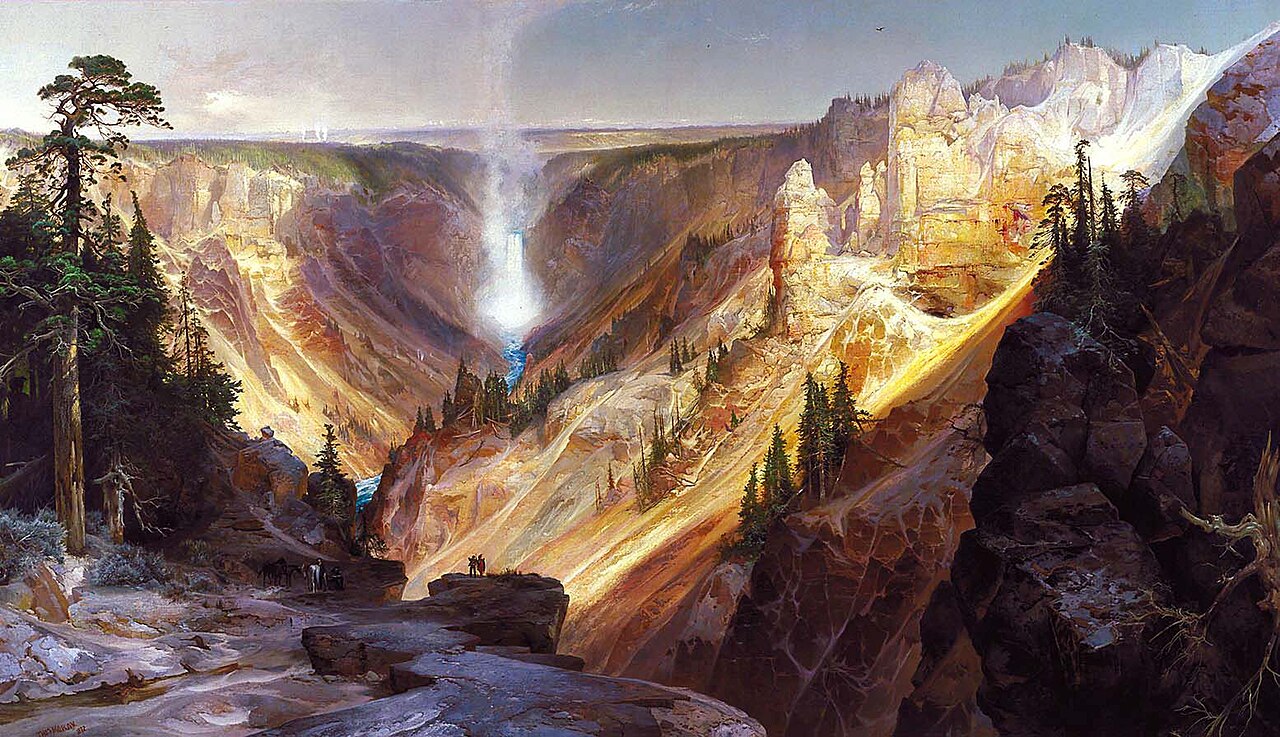
Art, Advocacy, and the American Sublime: Thomas Moran's Grand Canyon of the Yellowstone
The vast, untamed American West of the 19th century was a land of myth and mystery to most Easterners. Its colossal landscapes, unlike anything seen in Europe, challenged conventional understanding of beauty and wilderness. It took the vision of artists and the rigor of scientists to bring these wonders into the public consciousness, ultimately paving the way for their preservation. At the heart of this transformative period stands Thomas Moran, whose monumental painting, The Grand Canyon of the Yellowstone (1901), didn't just depict a landscape; it immortalized a concept and galvanized a nation towards conservation. This masterpiece, now a treasured possession of the Smithsonian American Art Museum, serves as a vivid testament to the power of art in shaping history, particularly in the creation of Yellowstone National Park and the enduring legacy of the Grand Canyon of the Yellowstone.
Moran's Brushstrokes: Capturing the Grandeur of the Grand Canyon of the Yellowstone
Thomas Moran, a leading figure of the Hudson River School, possessed a unique ability to translate the awe-inspiring scale of the American wilderness onto canvas. His 1901 painting, The Grand Canyon of the Yellowstone, is not merely a landscape but an epic narrative rendered in oil. Measuring an impressive 96½ × 168⅜ inches (over 8 by 14 feet), this massive work immediately immerses the viewer in the dramatic beauty of the Grand Canyon of the Yellowstone in Wyoming. Unlike his earlier, equally significant 1872 painting of the same title, this later canvas represents a culmination of Moran's mature style and profound understanding of the region.
Moran masterfully captures the canyon's defining features: the winding Yellowstone River cutting through steep, vibrant rhyolite walls, the misty veils of its iconic waterfalls, and a vast sky alive with dynamic clouds and ethereal light. His palette is a symphony of the canyon's unique geology—hues of yellow, red, and green shimmer, indicative of the rich mineral deposits that give the Grand Canyon of the Yellowstone its distinctive chromatic brilliance. Moran's technique blends meticulous observation, honed during his expeditions, with imaginative elements that evoke a sense of the sublime. He didn't just paint what he saw; he painted what he felt, infusing the rugged terrain with a romanticized grandeur that resonated deeply with the aesthetic sensibilities of his time. This artistic vision, a blend of realism and romanticism, allowed audiences to not only see but also feel the immense natural power and heroic beauty of this wild frontier. For a deeper dive into the specific details and artistry of this incredible work, consider exploring Unveiling Thomas Moran's Grand Canyon of the Yellowstone Details.
The Hayden Expedition: Art as the Catalyst for Yellowstone's Birth
The pivotal moment connecting Moran's art directly to conservation history came with the 1871 Hayden Geological Survey. Led by Ferdinand V. Hayden, this expedition was tasked with exploring the largely uncharted Yellowstone region. Crucially, Hayden understood the power of visual evidence to convey the wonders of this remote wilderness to a skeptical Eastern public and, more importantly, to decision-makers in Washington D.C. He invited Moran, along with photographer William Henry Jackson, to join the survey team. While Jackson’s photographs provided irrefutable factual evidence, it was Moran’s interpretive sketches and watercolors that captured the imagination.
Moran's vivid depictions of geysers, hot springs, and especially the Grand Canyon of the Yellowstone, were unlike anything seen before. These visuals, presented to Congress, painted a picture of a place so unique, so magnificent, and so unlike any other American landscape, that it deserved protection. They transformed abstract geological reports into tangible, awe-inspiring vistas. Within months of the expedition's return, and largely propelled by the visual documentation provided by Moran and Jackson, President Ulysses S. Grant signed the Yellowstone National Park Protection Act into law on March 1, 1872. This act declared Yellowstone the world's first national park, setting a precedent for conservation that would echo globally. Moran's art, particularly his dramatic renderings of the Grand Canyon of the Yellowstone, played an indispensable role in convincing a nation to preserve a wild place for "the benefit and enjoyment of the people."
A Lasting Legacy: Conservation Etched in Canvas and Stone
Moran's 1901 masterpiece, The Grand Canyon of the Yellowstone, completed nearly three decades after the park's establishment and after his second trip to Yellowstone in 1892, showcases his evolving relationship with the subject. This later, larger canvas builds upon his earlier sketches and memories, refining his vision and solidifying his personal connection to the landscape. It wasn't just a painting; it was a statement about the enduring value of American wilderness and the foresight required to protect it. Donated to the Smithsonian in 1928 by George D. Pratt, it quickly became a cornerstone of the museum's collection, symbolizing the critical intersection of art, science, and environmental advocacy in 19th-century America.
Moran's romanticized portrayal of the Grand Canyon of the Yellowstone significantly shaped public perception of the American West. He helped cultivate a national identity rooted in the majesty of its natural landscapes, inspiring generations to appreciate and protect these treasures. His work remains a powerful reminder that art can transcend mere aesthetics, serving as a potent tool for social change and environmental stewardship. For more detailed information on this specific artwork and its place in art history, see Thomas Moran's Masterpiece: The 1901 Grand Canyon of Yellowstone.
Visiting the Grand Canyon of the Yellowstone Today: A Natural Masterpiece Awaiting You
Today, the Grand Canyon of the Yellowstone continues to be one of Yellowstone National Park's most spectacular and visited attractions. It stands as a living testament to the wonders Moran captured, yet experiencing it in person offers a dimension no painting, however grand, can fully convey. As you stand on its precipices, gazing into its depths, you can feel the raw power of nature that captivated Moran more than a century ago.
Practical Tips for Experiencing the Grand Canyon of the Yellowstone:
- Iconic Viewpoints: Don't miss Artist Point, often considered the same vantage point Moran used for his most famous works. Other must-see spots include Inspiration Point, Grandview Point, and Lookout Point. Each offers a unique perspective on the canyon and its roaring waterfalls, the Upper and Lower Falls.
- Hiking Opportunities: For the adventurous, the Brink of the Lower Falls Trail takes you right to the top of the 308-foot Lower Falls, offering an exhilarating perspective. Uncle Tom's Trail (currently closed for renovations, always check park status) provides a steep descent via a series of stairs for a dramatic view from the canyon floor.
- Best Time to Visit: Late spring through early fall offers the best weather and accessibility. The canyon's colors pop against the green pines, and the waterfalls are at their most powerful from snowmelt. Winter transforms it into a stark, frozen wonderland, accessible via snowmobile or snowcoach.
- Geological Wonders: Take time to appreciate the unique geology. The vibrant yellows, oranges, and reds are due to the iron compounds in the rhyolite rock oxidizing, creating a breathtaking palette that shifts with the light.
- Conservation in Action: As you explore, remember the legacy of Moran and the Hayden Survey. Your visit contributes to the ongoing conservation efforts that protect this priceless landscape for future generations. Practice Leave No Trace principles to ensure its pristine beauty endures.
The Grand Canyon of the Yellowstone is more than a geological feature; it is a symbol of American wilderness, a testament to the foresight of early conservationists, and a living canvas that continues to inspire. Moran's painting ensures that its majesty is forever etched in our cultural memory, urging us to visit, protect, and cherish these natural masterpieces.
